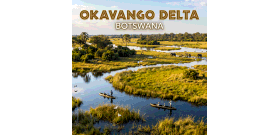
 Okavango Delta in December: Green season brings new safari experiences and birdlife
December marks the start of the summer rainy season in Botswana’s Okavango Delta, bringing a dramatic change to the landscape and safari experience. Temperatures remain high, thunderstorms become more frequent, and the Delta’s floodplains and woodlands turn green as fresh vegetation emerges. For the African travel trade, this period offers a different product for clients: fewer crowds, young animals, and excellent birdwatching, but also more dispersed wildlife and changing activity options. Sellers should be aware of the unique conditions, practical considerations, and health precautions that come with the green season.
The rainy season in the Okavango Delta is characterised by daytime temperatures of 30°C to 35°C, with nights much warmer than in the dry season. Humidity rises as the rains become more regular, and afternoon thunderstorms are common, sometimes bringing heavy downpours and strong winds. Rainfall is not continuous; sunny periods alternate with storms, and the amount of rain can vary from year to year. The landscape transforms as fresh grass and new leaves appear, and seasonal pans begin to fill with water, creating a lush, green environment across much of the Delta.
It is important for sellers to explain the difference between the local rainy season and the annual Okavango flood. The floodwaters originate in the Angolan highlands and reach the Delta during Botswana’s dry season, usually several months after the rains begin. By December, water levels in some channels may be low, even as local rainfall increases. This means that water-based activities such as mokoro excursions and motorboat trips depend on the location of the camp and the specific water conditions. Sellers should always confirm activity availability with lodges before booking for clients who prioritise water experiences.
December is a rewarding month for wildlife and birdwatching in the Okavango Delta. Elephants, buffalo, giraffes, zebras, impalas, red lechwe, wildebeest and other antelope remain present, but the availability of fresh grazing and rainwater allows many animals to disperse over a wider area. Lions, leopards, hyenas and wild dogs are also found throughout the Delta, but their distribution changes as prey animals move into newly green areas. The green season is especially good for birdwatchers, with migratory species arriving from Europe and other parts of Africa, and resident birds displaying breeding plumage and nesting. Kingfishers, bee-eaters, rollers, herons and storks are among the highlights for clients interested in birdlife.
The animal behaviour in December is shaped by the arrival of regular rainfall. Herbivores are less dependent on permanent rivers and lagoons, so game viewing becomes less predictable than in the dry season. The dense vegetation provides more cover, making sightings more challenging but also more rewarding for patient travellers. December is also the main breeding season for several antelope species, and clients may see impala lambs and young lechwe. The abundance of young animals provides opportunities for predators, and the combination of newborn wildlife, green vegetation and dramatic skies is excellent for photographers.
For the travel trade, December is outside the traditional peak safari season in Botswana. Fewer visitors mean a quieter experience and, depending on the lodge, potentially more favourable accommodation rates. However, the rainy season brings practical considerations. Sellers should advise clients to pack lightweight, breathable clothing, a sun hat, sunglasses, high-SPF sunscreen and a waterproof jacket for storms. Early morning and late afternoon game drives are most comfortable, and heavy rain can affect the timing and duration of activities. Self-drive travellers should be warned that unpaved tracks can become muddy or difficult to navigate, and extra time may be needed for transfers.
Health precautions are essential. Mosquito activity increases with rainfall and warmer conditions, and the Okavango Delta is a malaria-risk area. Sellers should advise clients to seek medical advice before travelling, use appropriate insect repellent, and take recommended malaria prophylaxis. Waterproof bags or covers are useful for protecting cameras and binoculars, especially during boat trips or sudden downpours. Agencies should also remind clients to check which activities are available at their chosen camp, as not all lodges offer the same mix of game drives, walking safaris, mokoro excursions and boat trips in December.
Connectivity from African hubs to the Okavango Delta is typically via Maun or Kasane airports, with onward transfers by light aircraft or road to safari camps. While no official air connectivity data was confirmed in this session, Maun is widely recognised as the main gateway for Delta safaris, with flights from Johannesburg, Cape Town, Gaborone and Windhoek. Agencies should check airline schedules and book early during the festive period, as demand may increase around holidays. The lack of official tourism arrival statistics is a gap, but the Delta remains a key destination for both regional and international travellers.
In comparison with other African green-season safari destinations, the Okavango Delta shares similarities with Zambia’s South Luangwa National Park, which also offers excellent birdwatching, young animals and lush landscapes during the rains. Both destinations see more dispersed wildlife and fewer visitors in the green season, but the Okavango’s unique flood dynamics and permanent channels set it apart. No official data on green-season visitor numbers or wildlife densities in other countries was found in this session, so agencies should rely on local expertise and client feedback when comparing options.
The Okavango Delta is a UNESCO World Heritage Site and one of Africa’s most important conservation areas. The region’s unique ecosystem supports a wide range of species and attracts travellers seeking both classic and off-peak safari experiences. The lack of updated conservation status or official figures is a limitation, but the Delta’s reputation for biodiversity and sustainable tourism remains strong. Looking ahead, the green season offers African travel sellers a chance to promote a different side of the Okavango, appealing to birdwatchers, photographers and clients seeking value and a quieter safari. Agencies should monitor for updates on activity availability, health advisories and conservation developments as the season progresses.
Sources: primary facts provided by editor from Okavango Delta this session.